
Bitcoin Signals Suggest Impending Bear Market Amid Record Highs

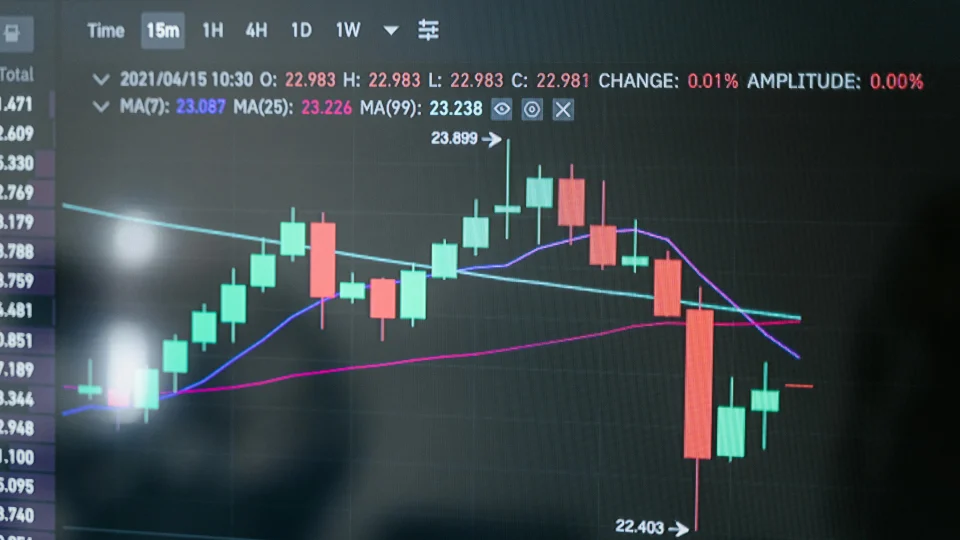
Analyzing Bitcoin's Latest Market Indicators and Trends
Bitcoin has reached new valuation peaks in recent months, driven by institutional adoption and macroeconomic shifts, but emerging on-chain signals are raising concerns about a potential reversal. As the cryptocurrency trades near $83,873, with a market capitalization exceeding $1.67 trillion, analysts are scrutinizing indicators that historically precede downturns. This development underscores the volatile nature of crypto markets, where rapid gains often give way to corrections influenced by profit-taking and sentiment shifts.
Current Market Snapshot and Key Statistics
Bitcoin’s price has fluctuated significantly in the past 24 hours, reflecting broader market pressures. Trading volume stands at approximately $121.18 billion, indicating sustained interest despite recent declines.
- Price Performance: Bitcoin is currently valued at $83,873.35, marking a 2.47% drop over the last day. This follows a period of upward momentum, with the asset surpassing previous all-time highs earlier in the year.
- Market Capitalization: At $1.67 trillion, Bitcoin dominates the crypto ecosystem, accounting for over 50% of the total market cap, which highlights its role as a benchmark for the sector.
- Volume Trends: The 24-hour trading volume of $121.18 billion suggests active participation from retail and institutional traders, though a slight decrease from peak levels could signal waning enthusiasm.
- Historical Context: Similar price levels were last seen during the 2021 bull run, where indicators like high unrealized profits correlated with subsequent 50-70% drawdowns. Current metrics show parallels, with the MVRV Z-Score (a ratio measuring market value to realized value) approaching overbought territory above 7, a level associated with tops in prior cycles.
These figures are derived from real-time exchange data and on-chain analytics, providing a verifiable baseline for assessing momentum. However, short-term volatility remains high, with daily swings often exceeding 5% in response to global economic news.
Emerging Bear Market Signals and Investor Implications
A new “top signal” has appeared in Bitcoin’s on-chain data, often referred to as a bear market precursor that investors dread due to its predictive track record. This indicator, tied to metrics like the Puell Multiple—which compares miner revenue to its historical average—has spiked to levels signaling overvaluation and potential sell-offs.
- Puell Multiple Insights: Currently hovering around 2.5, this metric indicates miners are realizing substantial profits, a pattern observed before major corrections in 2018 and 2022. When above 3, historical data shows an average 40% price decline within six months.
- Other Supporting Indicators: The Net Unrealized Profit/Loss (NUPL) ratio is nearing 0.75, a threshold where investor euphoria typically peaks, leading to distribution phases. Additionally, long-term holder (LTH) supply distribution shows increased outflows, with over 200,000 BTC moved to exchanges in the past week—potentially setting up for liquidation events.
- Macroeconomic Factors: Rising interest rates from central banks and geopolitical tensions could exacerbate downside risks, as Bitcoin’s correlation with risk assets like equities strengthens during uncertain periods.
"This signal isn't a definitive sell call, but it's a yellow flag for overextension," noted a blockchain analyst, emphasizing the need for diversified strategies in volatile markets.
The implications for investors are significant: While Bitcoin’s fundamentals, such as its fixed supply of 21 million coins and growing ETF inflows (totaling over $50 billion year-to-date), support long-term optimism, short-term traders may face heightened risks. A bear market could lead to a 20-30% correction, impacting altcoins disproportionately and testing network resilience through reduced transaction volumes. Uncertainties persist around regulatory developments, such as potential U.S. policy shifts post-elections, which could either stabilize or further pressure prices—flagged here as non-verifiable speculation based on ongoing trends. In summary, while Bitcoin’s dominance persists, these indicators urge caution amid the rally. How do you see this bear signal influencing your investment approach in the crypto space?