
Fortnite Censors Kill Bill’s Notorious Vehicle in Latest Crossover Controversy

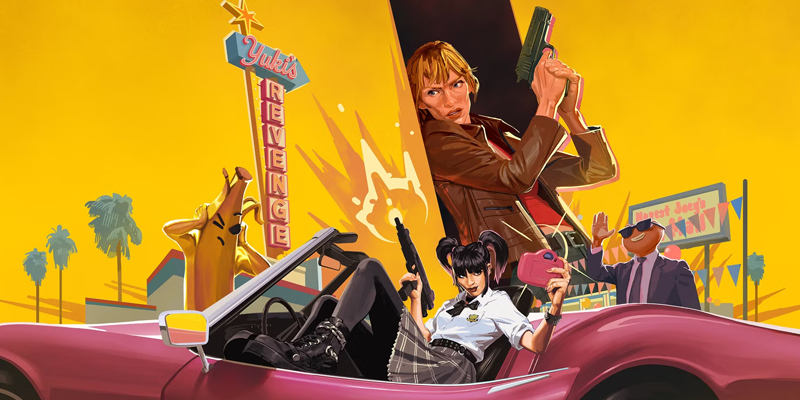
In the heat of a Fortnite battle royale, players often rely on flashy vehicles to outmaneuver opponents, zipping across the island in style. But for fans of Quentin Tarantino’s 2003 revenge epic Kill Bill: Volume 1, the thrill turned to confusion this week when the game’s latest crossover introduced a toned-down version of the film’s infamous yellow convertible—sans its provocative original name. What was once boldly christened the “Pussy Wagon” now appears in Fortnite as a neutered “Yuki’s Revenge,” sparking debates among gamers about the boundaries of pop culture adaptation in a family-oriented virtual world.
The Crossover Clash: Kill Bill Meets Battle Royale
Fortnite, developed by Epic Games, has long been a playground for high-profile collaborations, blending blockbuster films, music icons, and superheroes into its ever-evolving battle royale format. Since its launch in 2017, the game has amassed over 500 million registered players worldwide, with seasonal updates frequently incorporating licensed content to keep the community engaged. The recent addition of Kill Bill elements, including skins inspired by Uma Thurman’s Bride and David Carradine’s Bill, fits this pattern, arriving as part of Chapter 6’s thematic push toward cinematic flair.
However, the censorship of the Pussy Wagon—a garish, heart-shaped hot rod driven by the character Buck in the film—has drawn sharp attention. In Kill Bill, the vehicle symbolizes the movie’s blend of hyper-violence, dark humor, and unapologetic pulp aesthetics, drawing from Tarantino’s signature style influenced by 1970s grindhouse cinema and Japanese exploitation films.
The name itself is a crude pun, referencing the character’s sleazy intentions, which earned the film an R-rating for strong bloody violence, language, and sexual content. In Fortnite, this icon has been reimagined as a drivable emote and cosmetic item, but Epic Games opted to alter its moniker to “Yuki’s Revenge,” likely nodding to the assassin Yukio from Kill Bill: Volume 2 while stripping away the explicit reference. Players accessing the item through the in-game shop or battle pass have reported the change, with some discovering it via datamined files ahead of the official rollout on November 25, 2025.
Why the Edit? Epic’s Family-Friendly Stance Under Scrutiny
Epic Games has a history of adapting licensed content to align with Fortnite’s ESRB Teen rating, which advises discretion for diverse content, in-game purchases, and user interactions. This isn’t the first time the developer has sanitized elements for broader appeal—previous crossovers, like the Star Wars saga, have omitted graphic violence or language to suit the game’s younger demographic, estimated at around 40% under 13 years old based on industry surveys.
- Cultural Sensitivity in Gaming: The decision reflects broader industry trends toward inclusivity, especially post-2020, when companies like Epic faced pressure to address problematic tropes. Tarantino’s films, while critically acclaimed ( Kill Bill: Volume 1 holds an 85% Rotten Tomatoes score), have been critiqued for their edgy content, including misogynistic undertones.
- Player Reactions: Online forums buzz with mixed responses. Some praise the move for making the game accessible, while others lament the loss of authenticity. One Reddit user noted, > “It’s like getting the Bride skin but without her katana—feels half-baked.”
- Precedent in Collaborations: Similar edits occurred in the 2023 John Wick crossover, where gunplay was stylized to avoid realism, and the 2024 Avatar: The Last Airbender event, which softened elemental destruction sequences.
Historical Echoes: From Pulp Fiction to Pixelated Playgrounds
To understand the ripple effects, consider Kill Bill’s legacy. Released amid a post-9/11 cultural shift, the two-part saga grossed over $180 million worldwide, revitalizing Tarantino’s career after Pulp Fiction’s 1994 Oscar wins. It paid homage to martial arts icons like Bruce Lee and Akira Kurosawa, influencing games from Yakuza to Sleeping Dogs. Fortnite’s inclusion marks a full-circle moment, as the battle royale genre itself owes debts to survival narratives in films like Battle Royale (2000), a Japanese thriller that inspired the mode’s last-player-standing mechanics. Yet, this censorship highlights evolving tensions in gaming’s maturation.
As Fortnite transitions from a kids’ phenomenon to a metaverse-like platform—boasting integrations with Unreal Engine 5 for realistic graphics—the balance between nostalgia and modernity grows trickier. Past controversies, such as the 2018 loot box backlash leading to regulatory scrutiny in 20+ countries, underscore how seemingly minor edits can ignite larger discussions on creative freedom. What could this mean for the future of gaming crossovers? As Epic expands into live events and virtual concerts, will more Hollywood icons get “Fortnite-ified,” diluting their edge to fit a sanitized digital realm? Players and creators alike may soon demand more transparency, ensuring that the thrill of the original stories isn’t lost in translation.