
Hinge CEO Transitions to Lead New AI-Driven Dating Venture Amid Industry Shifts

Leadership Change Signals Evolving Role of AI in Online Dating
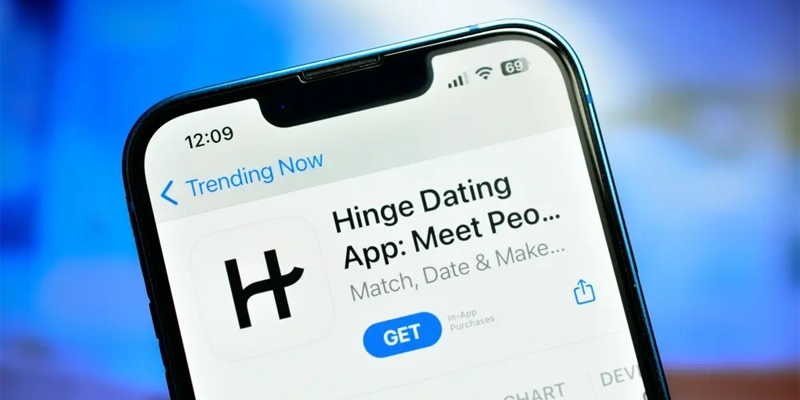
In a move reflecting the intensifying integration of artificial intelligence in the dating sector, Justin McLeod, founder and CEO of Hinge, is stepping down to spearhead Overtone, a new AI-focused dating service. This transition occurs as Hinge, part of Match Group, projects reaching $1 billion in revenue by 2027, underscoring the app’s growth trajectory despite broader market challenges in user engagement. Match Group, which also operates Tinder and OkCupid, is providing pre-seed financing for Overtone and plans to hold a substantial ownership stake.
The project originated within Hinge, where McLeod and a dedicated team spent the past year developing it as an early-stage platform emphasizing AI and voice tools to foster more thoughtful and personal user connections. This internal incubation highlights how established players are leveraging internal innovation to explore standalone AI applications. Jackie Jantos, currently Hinge’s president and chief marketing officer, will assume the CEO role effective immediately. McLeod will remain in an advisory capacity at Hinge through March 2026, ensuring continuity during the handover.
Market Pressures Driving AI Adoption in Dating Apps
The dating app industry faces notable headwinds, particularly among younger demographics. Tinder, a flagship Match Group product, has experienced nine consecutive quarters of declining paying subscribers, prompting a pivot toward AI enhancements to boost user retention and match quality. These trends align with growing disillusionment, especially among Gen Z users, who report fatigue with traditional online dating formats and a preference for in-person interactions.
- Hinge’s recent AI recommendation feature, introduced in March 2025, contributed to a 15% increase in matches and contact exchanges during the first quarter, demonstrating measurable benefits in user engagement.
- This week’s launch of Hinge’s “Convo Starters” tool aims to elevate conversations beyond superficial small talk, addressing common complaints about interaction quality.
- Broader experiments include Tinder’s upcoming “Chemistry” feature for 2026, which—with user permission—will analyze camera roll photos to better understand preferences, though privacy concerns remain a point of contention.
Historical Context and Future Implications for AI in Relationships
Hinge, launched by McLeod in 2011, differentiated itself by prioritizing relationship-building over casual encounters, a strategy that led to its full acquisition by Match Group in 2019. This evolution mirrors the broader software landscape, where AI is increasingly embedded to personalize experiences and sustain revenue amid market saturation. The rise of Overtone could accelerate AI’s role in voice-based interactions, potentially setting new standards for emotional intelligence in matchmaking. However, uncertainties persist regarding how Overtone will distinguish itself—details on its core mechanics remain limited at this early stage.
Flag: Specific differentiation strategies for Overtone are not yet publicly detailed, pending further announcements. As AI tools proliferate, they may reshape societal norms around digital romance, enhancing connections for some while raising questions about authenticity and data privacy. What could this mean for the future of the field? With Gen Z’s preferences leaning toward genuine interactions, the success of AI-driven platforms will hinge on balancing technological efficiency with human-centric design, potentially influencing broader trends in social software.