
Bank of Japan Elevates Rates to 0.75%, Bitcoin Maintains Stability Above $85,000

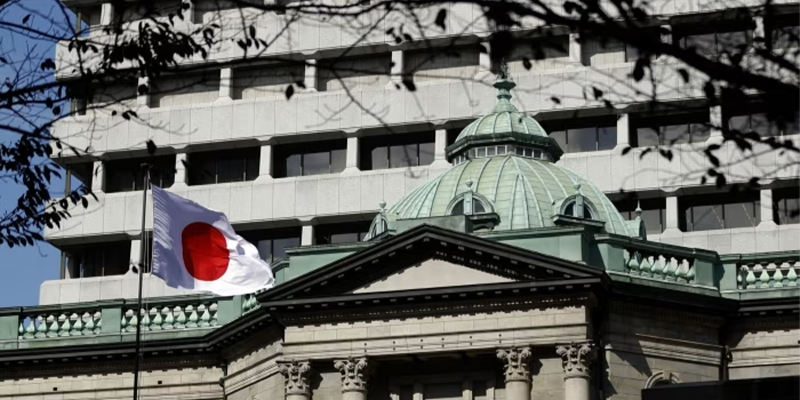
In the high-stakes world of global finance, where central bank decisions can send shockwaves through markets, the quiet hum of trading floors on December 19, 2025, told a different story. As the Bank of Japan (BOJ) announced its latest policy shift, cryptocurrency traders braced for turbulence—yet Bitcoin’s price chart showed only a subtle uptick, underscoring a market that appears increasingly desensitized to anticipated moves.
BOJ's Rate Adjustment Signals Shift in Global Liquidity Dynamics
The BOJ’s decision to increase its policy interest rate by 25 basis points to 0.75% marks a significant milestone, representing the highest level in nearly three decades and accelerating Japan’s departure from prolonged ultra-easy monetary policies. This adjustment narrows the yield differential with other major economies, potentially reshaping funding conditions that have long supported risk assets like cryptocurrencies. Historically, BOJ tightening has correlated with notable declines in Bitcoin’s value, driven by the unwinding of yen carry trades—strategies where investors borrow cheaply in yen to fund higher-yield investments elsewhere. Key past episodes include:
- March 2024: Bitcoin dropped 23% following a rate hike.
- July 2024: A 30% decline amid similar policy shifts.
- January 2025: 31% pullback as liquidity conditions tightened.
In contrast, this latest hike elicited a minimal response, with Bitcoin gaining less than 1% and stabilizing around $87,000. Market data indicates this resilience stems from pre-emptive pricing, as traders had widely expected the move based on prior signals from Japanese economic indicators like wage growth and inflation trends.
Bitcoin's Steady Performance Amid Priced-In Expectations
Analysts attribute Bitcoin’s composure to a maturing market that has absorbed the BOJ’s gradual normalization path. The cryptocurrency’s price has hovered in the $85,000–$87,000 range post-announcement, reflecting broader confidence in its role as a hedge against traditional monetary fluctuations. This stability contrasts with earlier cycles, where sudden liquidity squeezes amplified volatility across digital assets. Forward guidance from BOJ Governor Kazuo Ueda during the post-decision press conference emphasized readiness for additional hikes, potentially reaching 1% or higher by late 2026, contingent on sustained inflation above the 2% target and robust wage increases. As one market observer noted:
“Markets are pricing in a near-certain 25 basis point hike, marking the highest Japanese policy rate in about 30 years. While the hike itself is largely anticipated, the real focus is on Governor Ueda’s forward guidance during the press conference—signals of future hikes could amplify effects.”
This measured approach suggests that while the immediate impact was negligible, ongoing tightening could exert prolonged pressure on global liquidity, influencing capital flows into crypto. Bitcoin’s current positioning—bolstered by institutional adoption and ETF inflows—may provide a buffer, with trading volumes remaining steady at levels seen in recent months.
Altcoins' Vulnerability to Extended Tightening Cycle
While Bitcoin demonstrates fortitude, altcoins face heightened risks from the BOJ’s trajectory. These assets, often more leveraged and liquidity-sensitive, have historically amplified Bitcoin’s downside during yen-driven corrections. The end of Japan’s near-zero rate era, which facilitated cheap borrowing for speculative trades, could lead to broader deleveraging if yields continue rising. Projections indicate a challenging environment through 2026, with potential for reduced risk appetite as Japanese investors repatriate funds. Analysts highlight:
- Altcoins’ beta to Bitcoin, typically 1.5–2.0, implying outsized reactions to liquidity events.
- Historical data showing 20–30% average drops in altcoin indices during prior BOJ hikes.
- Current market cap distribution, where Bitcoin dominates 55% of the total crypto space, leaving smaller tokens exposed.
One commentator warned of the implications:
“The BOJ just hiked rates to 0.75%, ending decades of ultra-loose policy and narrowing the gap with global yields. History shows that every prior tightening has triggered 20–30% Bitcoin drops as yen carry trades unwind and liquidity tightens. Yet with the hike fully priced in and BTC holding around $85k–$87k, this could be the dip buyers have been waiting for.”
Another added a stark outlook for alternatives:
“BOJ signals it is ready to hike further, potentially 1% or higher by late 2026, depending on wage growth and sustained inflation. NO MERCY FOR ALTCOINS.”
Overall, the BOJ’s actions underscore evolving interconnections between traditional finance and crypto, where anticipated policy shifts foster resilience but uncharted future tightenings pose systemic risks. (Note: Projections for 2026 rates are based on analyst consensus and BOJ statements; actual paths may vary with economic data.) How do you anticipate the BOJ’s ongoing policy normalization affecting your crypto investment strategy?