
Agentic AI Framework Automates Scientific Discovery Workflow in New Implementation

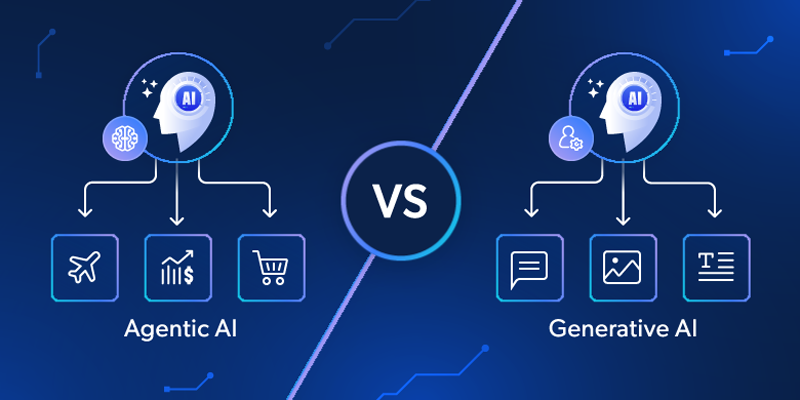
In the rapidly evolving field of artificial intelligence, agentic systems are emerging as tools to streamline complex research processes, potentially reducing the time from hypothesis to reporting by integrating multiple AI components into a cohesive pipeline.
Advancements in Agentic AI for Scientific Research
Agentic AI frameworks represent a shift toward autonomous systems capable of handling multi-step tasks, particularly in scientific domains where iterative analysis is essential. This implementation demonstrates a complete pipeline that combines literature retrieval, hypothesis formulation, experimental design, simulation, and report generation, using established machine learning libraries to create a modular, extensible system.
Core Components of the Framework
The framework is built around specialized agents that interact sequentially to mimic a research workflow. Key elements include:
- Literature Retrieval Agent: Utilizes TF-IDF vectorization and cosine similarity to search a predefined corpus of scientific papers. For instance, it processes abstracts and titles from fields like computational biology and genome editing to identify relevant documents based on user queries.
- Hypothesis Generation: Leverages a pre-trained language model, such as a lightweight sequence-to-sequence architecture, to propose testable hypotheses grounded in retrieved literature. This step synthesizes context from top-matching papers into concise, 2-3 sentence propositions.
- Experimental Planning and Simulation: Designs protocols by defining variables (e.g., baseline models like sequence CNNs versus augmented ones incorporating protein language embeddings) and simulating outcomes with randomized metrics. In demonstrations, simulated AUROC scores show baseline performance around 0.78, with gains of approximately 0.05 from enhancements—though these are synthetic and not derived from real data, highlighting a limitation in current validation.
- Reporting Agent: Compiles results into structured reports with sections on background, approach, setup, results, and future work, ensuring outputs resemble professional scientific documents.
This modular design allows for easy integration of additional data sources or models, potentially scaling to larger corpora beyond the sample of five papers used in the example, which cover topics from protein structure prediction to materials optimization.
Implications for AI-Driven Scientific Discovery
The framework’s implications extend to accelerating research in data-intensive fields, where manual literature reviews and experiment planning can consume significant resources. By automating these stages, it could enhance efficiency in areas like biotechnology and materials science, though real-world adoption would require validation against empirical datasets.
- Efficiency Gains: Simulations suggest the pipeline can process a query from inception to report in a single execution, contrasting with traditional workflows that might span weeks.
- Scalability Challenges: Reliance on small-scale models (e.g., 80 million parameters) limits depth; larger models could improve accuracy but increase computational demands, with no specific benchmarks provided for production environments.
- Ethical and Practical Considerations: While the system grounds outputs in literature, uncertainties in simulated results (flagged as randomized for demonstration) underscore the need for human oversight to avoid propagating errors in hypothesis testing.
Quotes from the implementation’s structure emphasize its intent: “Propose a single, testable hypothesis in 2-3 sentences,” guiding the AI to maintain focus and testability. Another prompt directs: “Write a clear report with sections: Background, Proposed Approach, Experimental Setup, Results and Discussion, Limitations and Future Work,” promoting standardized scientific communication. As AI agents like this evolve, they may democratize access to advanced research tools, but their impact on peer-reviewed science remains an open question—particularly regarding the integration of real experimental data over simulations. How do you see agentic AI frameworks influencing the pace and reliability of scientific breakthroughs in your field?