
US Government Backs Chip Startup xLight with $150 Million Equity Stake Amid Semiconductor Push

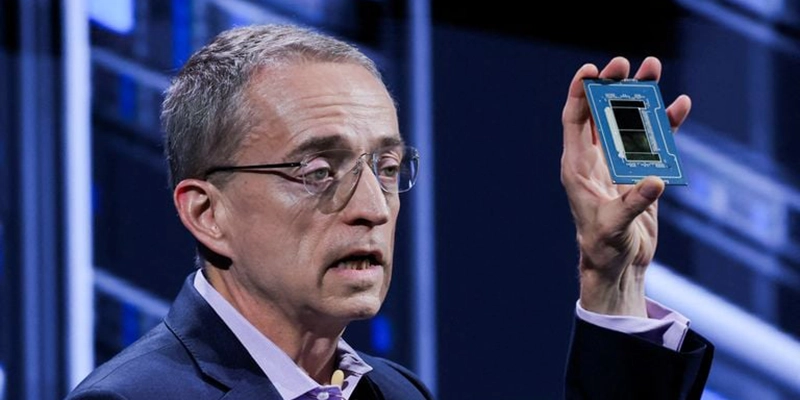
The U.S. government is set to become a major shareholder in xLight, a four-year-old semiconductor startup, through an investment of up to $150 million, highlighting a growing trend of federal involvement in critical technology sectors to bolster national security and innovation.
Government Equity in Tech: A Strategic Shift
The agreement, facilitated by the Commerce Department under the 2022 CHIPS and Science Act, marks the first such award during President Trump’s second term. This preliminary deal positions the government as xLight’s largest shareholder, expanding Washington’s role in private company cap tables. While the exact equity percentage remains subject to final negotiations, it underscores a broader strategy to counter global competition in semiconductor manufacturing, particularly from state-backed initiatives in China. This move follows a series of similar investments, reflecting escalating geopolitical tensions and supply chain vulnerabilities exposed in recent years. The CHIPS Act, enacted to enhance domestic production, has allocated billions for semiconductor advancements, with equity stakes emerging as a tool to align private innovation with public interests.
xLight’s Ambitious Technology and Leadership
xLight, based in Palo Alto, California, is developing advanced lithography technology using particle accelerator-powered lasers. These massive systems, comparable in size to a football field, aim to produce light sources for chip fabrication at wavelengths of 2 nanometers—significantly finer than the 13.5 nanometers used in current extreme ultraviolet (EUV) machines.
- Efficiency Gains: The technology could improve wafer processing efficiency by 30% to 40% while reducing energy consumption, potentially lowering costs and environmental impact in high-volume chip production.
- Market Challenge: This positions xLight to disrupt the dominance of ASML, the Dutch company holding a near-monopoly on EUV lithography equipment. ASML’s shares have risen 48.6% year-to-date, driven by demand for advanced chips in AI, computing, and consumer electronics.
- Leadership Team: CEO Nicholas Kelez brings expertise from quantum computing and government laboratories, including familiarity with particle accelerators. Executive Chairman Pat Gelsinger, former Intel CEO ousted in late 2024 after unmet manufacturing goals, views the project as “deeply personal.” Gelsinger, also a partner at Playground Global—which led xLight’s $40 million funding round in summer 2025—stated, “I wasn’t done yet,” emphasizing his commitment to U.S. semiconductor revival.
Broader Implications for Industry and Policy
The government’s equity strategy has elicited mixed reactions in Silicon Valley, where venture capitalists traditionally favor minimal state intervention. Sequoia Capital’s Roelof Botha, speaking at a recent tech event, quipped, “[Some] of the most dangerous words in the world are: ‘I’m from the government, and I’m here to help.’”
Botha, identifying as a “sort of libertarian, free market thinker,” acknowledged the necessity: “The only reason the U.S. is resorting to this is because we have other nation states with whom we compete who are using industrial policy to further their industries that are strategic and maybe adverse to the U.S. in long-term interests.” Prior equity deals include a 10% stake in Intel, investments in MP Materials (rare earths), Lithium Americas (lithium mining), Trilogy Metals, and two rare earth startups last month. Commerce Secretary Howard Lutnick defended the approach, stating the xLight partnership could “fundamentally rewrite the limits of chipmaking” to ensure technological leadership.
- Economic Impact: These investments aim to create U.S.-based supply chains, potentially adding thousands of high-tech jobs and reducing reliance on foreign suppliers. Semiconductor sales reached $574 billion globally in 2024, with AI-driven demand projected to grow at 20% annually through 2030.
- Societal and Geopolitical Ramifications: By prioritizing national security, the policy could reshape venture funding dynamics, introducing government voices to boardrooms and altering competitive landscapes. Critics question the risks of “state capitalism,” including potential conflicts of interest, while proponents highlight its role in countering adversarial advancements—China’s chip investments exceeded $50 billion in 2024 alone.
- AI Tie-In: Advanced chips like those targeted by xLight are foundational to AI scaling, enabling more efficient training of large language models and edge computing. This could democratize AI access but raises concerns over energy demands, as data centers already consume 2-3% of global electricity.